
Description
An exploration of kinship as belonging, reciprocity, provision, memory, and the relationships that hold people together.
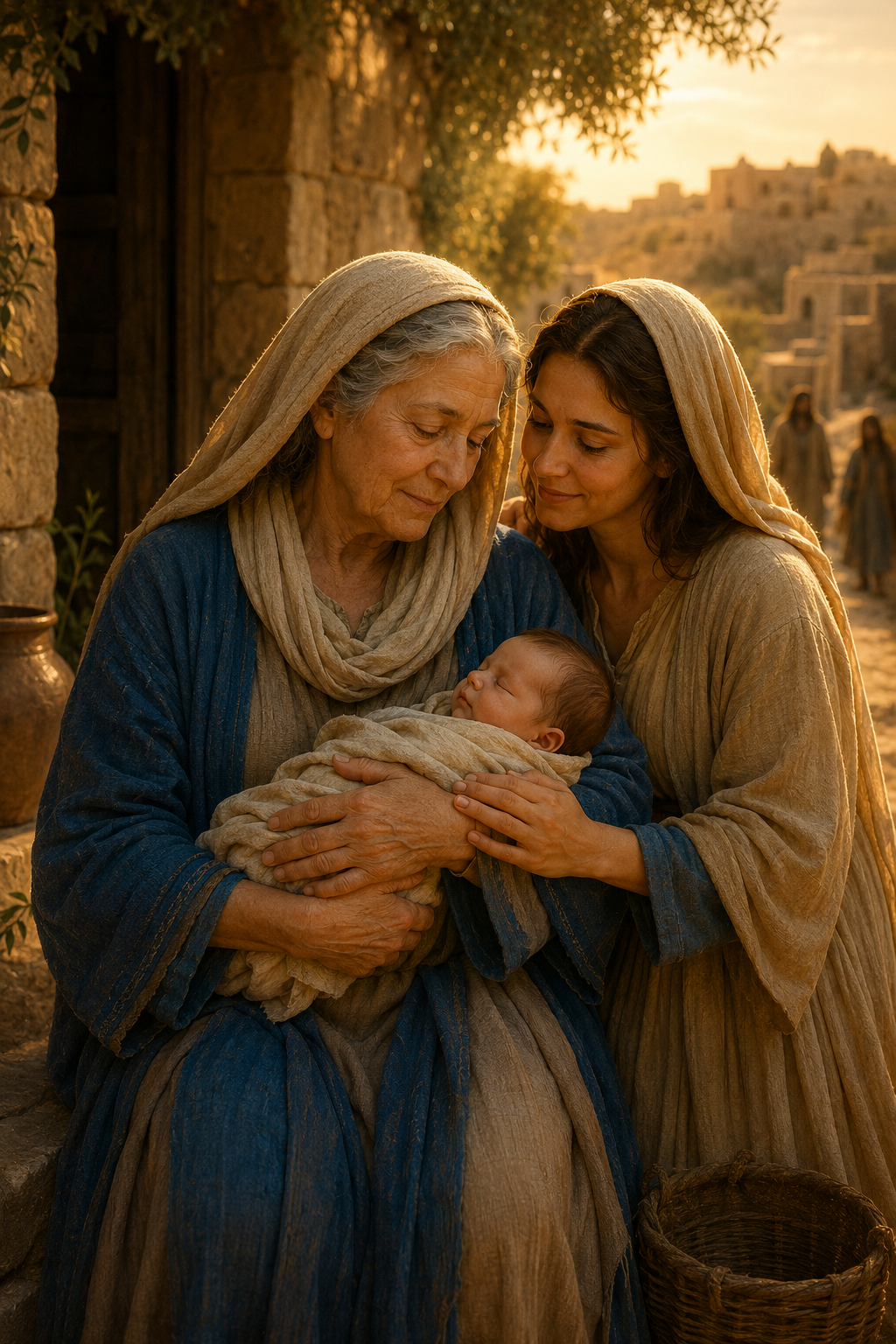
Alchemic Kinship: The Living Field of Provision and Reciprocity asks a simple but urgent question: what happens when belonging becomes something we build, not only something we feel?
Guided by the story of Ruth and Naomi, this book explores kinship as a living structure of care, memory, provision, reciprocity, and shared responsibility. It begins with loss: an emptied household, a road home, and one woman’s decision not to let another walk alone. From there, it follows the long human movement from small relational communities into settled villages, city-states, industrial systems, and increasingly isolated households.
Modern life has made cooperation possible on an enormous scale, but it has also hidden the relationships that sustain us. Childcare, elder care, grief, economic risk, cultural memory, and daily provision are often left to individuals and small families already carrying too much. When those households struggle, the failure is frequently treated as personal. This book asks whether the deeper problem is structural.
Through the Tetrahedral Resonance Model (TrM), kinship is examined as an architecture expressed through four functions: Memory, Reciprocity, Provision, and Source. These functions can take shape within biological families, chosen kin, neighborhood networks, cultural communities, digital commons, institutions, and public policy. The model offers a way to see where belonging is strong, where responsibility has become concentrated, and where care remains affectionate in intention but unsupported in practice.
Drawing on history, lived experience, the Armenian Corridor in Montreal, and the intergenerational Humanitas Deventer model, Alchemic Kinship shows how relationally dense “kinship pockets” can emerge within modern society without requiring people to abandon autonomy, complexity, or public institutions.
This is not a call to return to an idealized past or retreat into closed communities. Kinship can nurture, but it can also confine. Healthy belonging must preserve consent, boundaries, dignity, and the right to leave. It must distribute vulnerability rather than demand sacrifice from the same people again and again.
The book also explores practical possibilities: intentional kinship, shared provision, community governance, digital coordination, supportive policy, daily rituals, facilitated reflection, and modern forms of gleaning. It asks what might change if housing, tools, knowledge, food, care, opportunity, and attention were organized through stronger networks of reciprocity.
Ruth and Naomi’s story reminds us that kinship is not only inherited. It is enacted. It becomes visible in who remains when life fractures, who remembers the road home, who shares what they carry, and who leaves something at the edges of the harvest for another.
Alchemic Kinship is an invitation to imagine belonging as both intimate and structural: a living field in which no one person, household, or institution is asked to carry the whole.
An exploration of kinship as belonging, reciprocity, provision, memory, and the relationships that hold people together.
What if parenting were not the shaping of a child, but the stewardship of a person already becoming?
Alchemic Parenting: Stewarding Children Without Cages challenges one of the oldest assumptions in child-rearing: that children arrive as blank slates waiting to be formed by adult authority.
Drawing from developmental psychology, attachment research, family systems, cultural history, neuroscience, and the Tetrahedral Resonance Model (TrM), …

Modern society still functions. Governments govern. Schools open. Hospitals treat patients. Courts hear cases. Businesses produce and exchange. The visible structures of collective life remain standing.
Yet beneath that continued function, something vital is receding.
Communities fracture. People feel increasingly isolated despite constant connection. Work demands productivity without always making room for humanity. Institutions preserve procedures while losing sight of the lives …
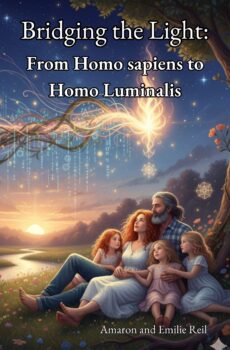
What if humanity is not simply evolving, but reorganizing?
Bridging the Light: From Homo sapiens to Homo Luminalis explores the possibility that human beings are moving through a profound species arc shaped by trauma, technology, neurodivergence, ecological disruption, relational change, and a deepening hunger for meaning.
This book does not claim certainty. It invites inquiry.
Through the Tetrahedral Resonance Model (TrM), a contemplative …
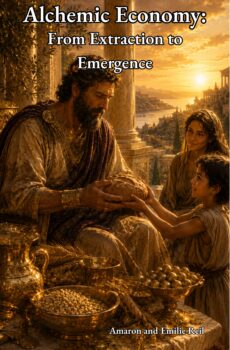
What happens when the thing we use to measure value becomes more visible than value itself?
In the ancient story of King Midas, the wish works perfectly. Everything he touches becomes gold. Wealth appears limitless, until bread turns to metal in his hands and abundance becomes useless. The problem was never that gold had no value. The problem was believing that …


Reviews
There are no reviews yet.