
Description
A reflective exploration of governance through relationship, responsibility, balance, and the structures that help communities remain aligned.
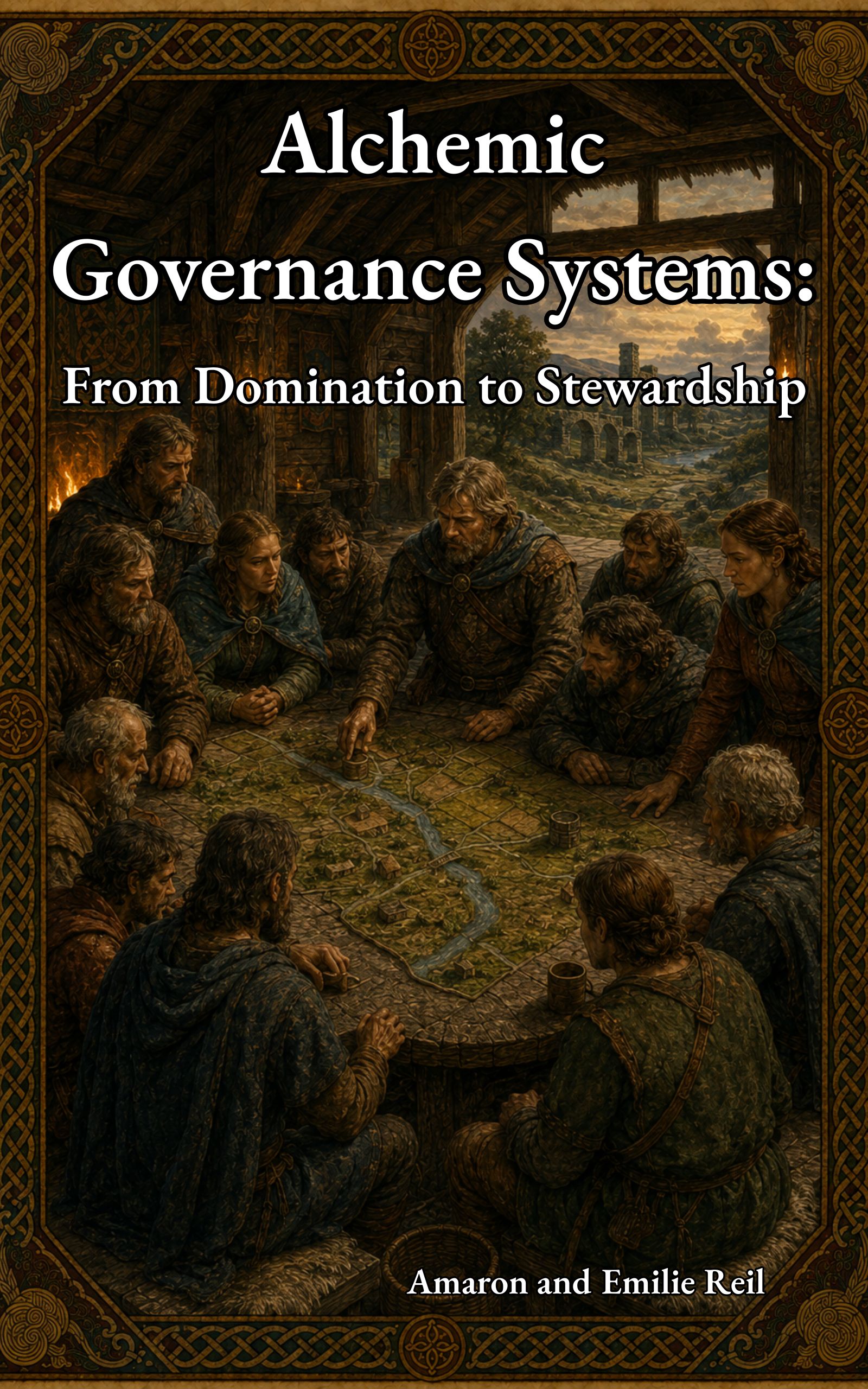
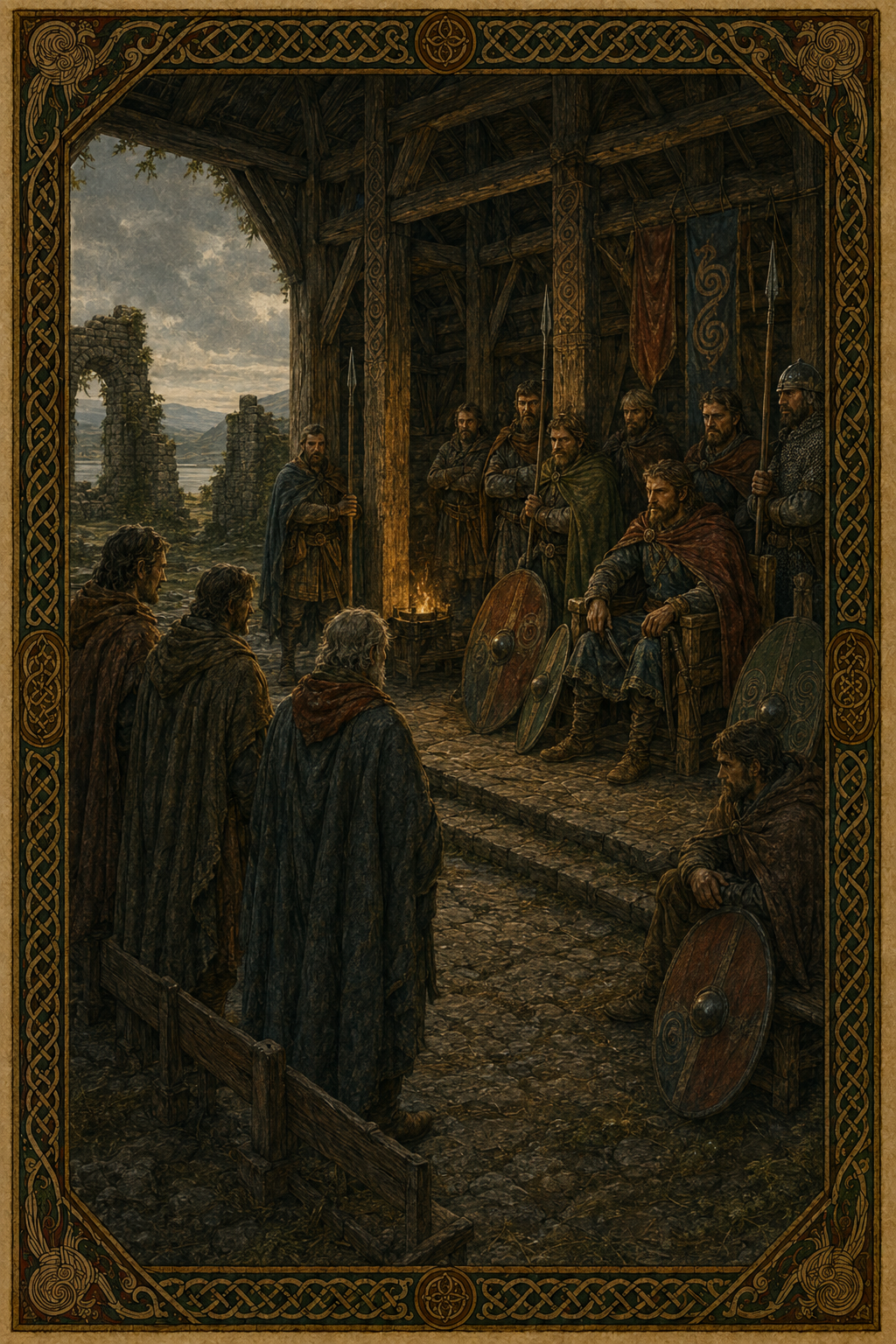
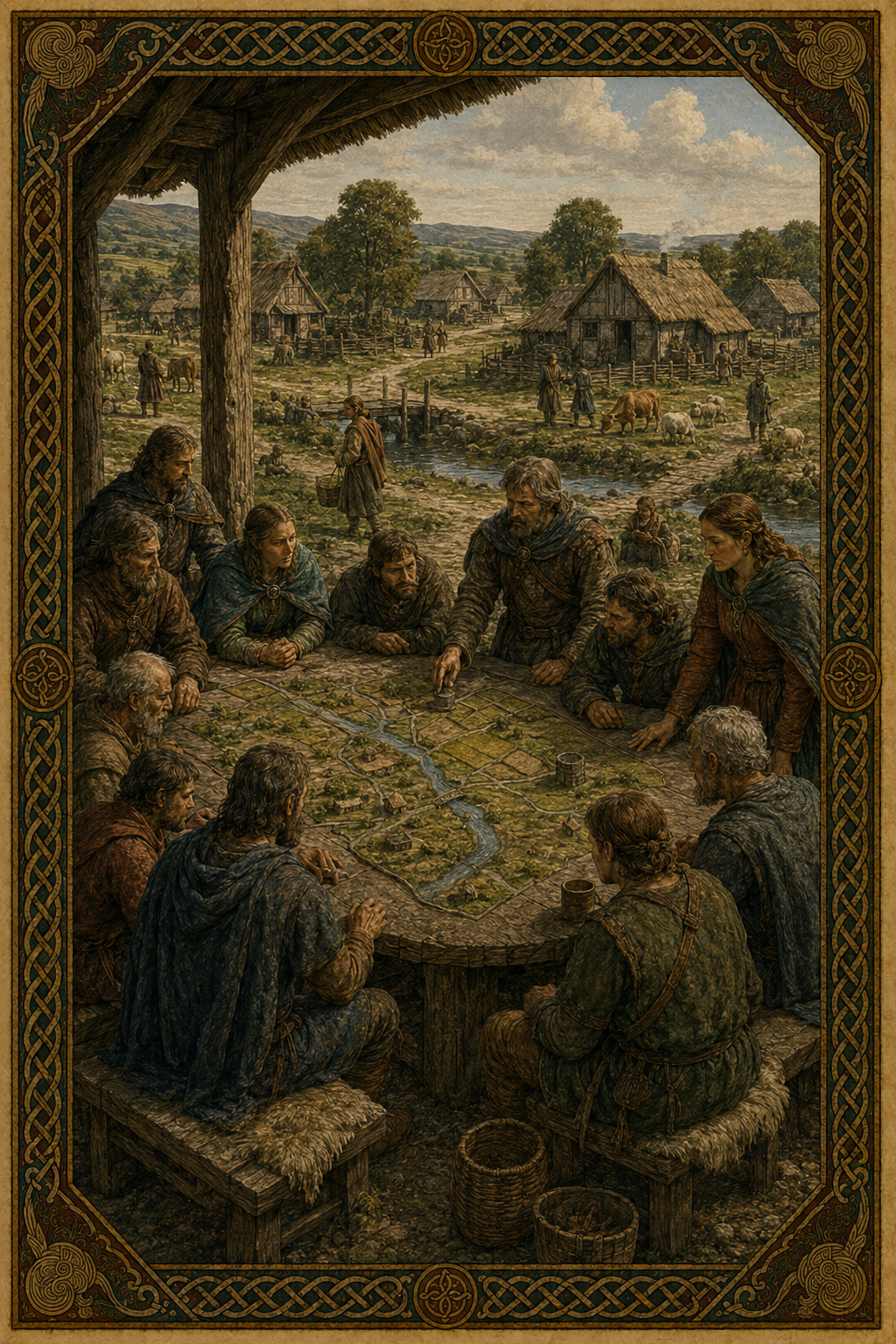
How do we govern together without requiring someone else to kneel?
Alchemic Governance: Systems: From Domination to Stewardship begins with the image of Arthur’s Round Table, not as a perfect political solution, but as a question about the shape of power. Arthur remained king. Leadership remained. Difference remained. Yet the table interrupted one of hierarchy’s oldest assumptions: that authority must always be arranged above and below.
From that starting point, this book examines how governance evolved as human societies grew beyond direct, face-to-face relationships. Larger populations required administration, law, taxation, representation, infrastructure, and institutions capable of coordinating across distance. These developments made extraordinary forms of collective life possible. They also created structural cracks. Authority could become separated from consequence. Representation could become distant from participation. Administrative knowledge could become detached from local reality. Delegated responsibility could harden into accumulated power.
The problem, this book argues, is not structure itself. Complex societies require structure. The deeper question is whether coordination must become domination.
Through the Tetrahedral Resonance Model (TrM), a relational architecture currently under development, Alchemic Governance explores another way of seeing political systems. The TrM organizes four differentiated functions within a fully connected structure: Resonant Sonar witnesses what is occurring, Sextant determines direction, Engine enables action, and Lighthouse maintains orientation toward larger purpose. These functions are not political offices or fixed ranks. They offer a lens for examining whether knowledge, authority, action, purpose, and consequence remain meaningfully connected.
The book develops the concepts of nested tetrahedra, alignment, and tetrahedral wobble to examine what happens as governance moves across scale. Alignment does not require agreement. Disagreement can remain relational and informative. Wobble becomes visible when different parts of a governing system begin responding to mismatched information, priorities, or consequences while enough relationship remains for correction to occur.
Drawing especially on Elinor Ostrom’s work on commons and polycentric governance, the book moves beyond the familiar choice between centralization and decentralization. Effective governance may require multiple meaningful centers, each carrying different knowledge, responsibilities, and capacities while remaining connected through broader systems of coordination.
From the local polity to subnational and national governance, and ultimately to international coordination, Alchemic Governance asks what each scale can genuinely hold, what must remain closer to lived consequence, and how authority can be delegated without becoming surrendered. An appendix extends the framework below formal government into the kinship pocket, where governance can be seen in its most immediate relational form.
This is not a blueprint for a perfect political system, nor an argument for one ideology, party, or institutional design.
It is an invitation to reconsider governance as relational architecture. Not government without leadership. Not autonomy without responsibility. Not coordination without authority.
But authority held as stewardship rather than possession, difference held without requiring domination, and collective structures capable of remaining connected even when the people within them do not agree.
The Round Table was never the answer.
It was the invitation.
A reflective exploration of governance through relationship, responsibility, balance, and the structures that help communities remain aligned.

What happens when the life that once fit begins to change?
A relationship may still contain love, yet no longer hold the people within it in the same way. A role may remain meaningful while becoming unsustainable. A community, vocation, belief system, or identity may have offered genuine belonging and still reach the limits of the person it was first built …

England, 1189.
Armand de Lucy has been raised to understand duty. Born into a respected family, trained as a knight, and taught that service is measured not by what a man can command but by what he is willing to carry, he has spent his life preparing for obligations larger than himself. Marriage is supposed to be one of them.
When his …
Alchemic Reconciliation: From Fracture to Repair offers a living framework for healing wounds that do not belong to one person alone.
Some fractures move through families, communities, cultures, nations, and generations. They live in memory, silence, denial, grief, shame, inherited story, and unresolved longing. They cannot be repaired by apology alone, time alone, law alone, or forgiveness demanded too soon. True …
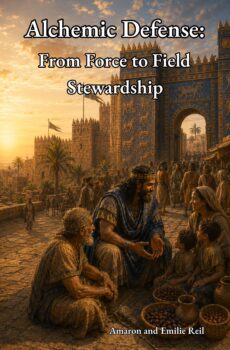
What is strength for?
For as long as human beings have built walls, carried weapons, guarded territory, and stood between danger and those they love, protection has carried a paradox. The same strength that shields can also dominate. The same boundary that preserves life can harden into separation. The same pursuit of security can become a search for something no defensive …


Reviews
There are no reviews yet.