Description
An introduction to the Tetrahedral Resonance Model (TrM), exploring how four differentiated functions and complete relationship can support coherence, adaptation, and resilient coordination.
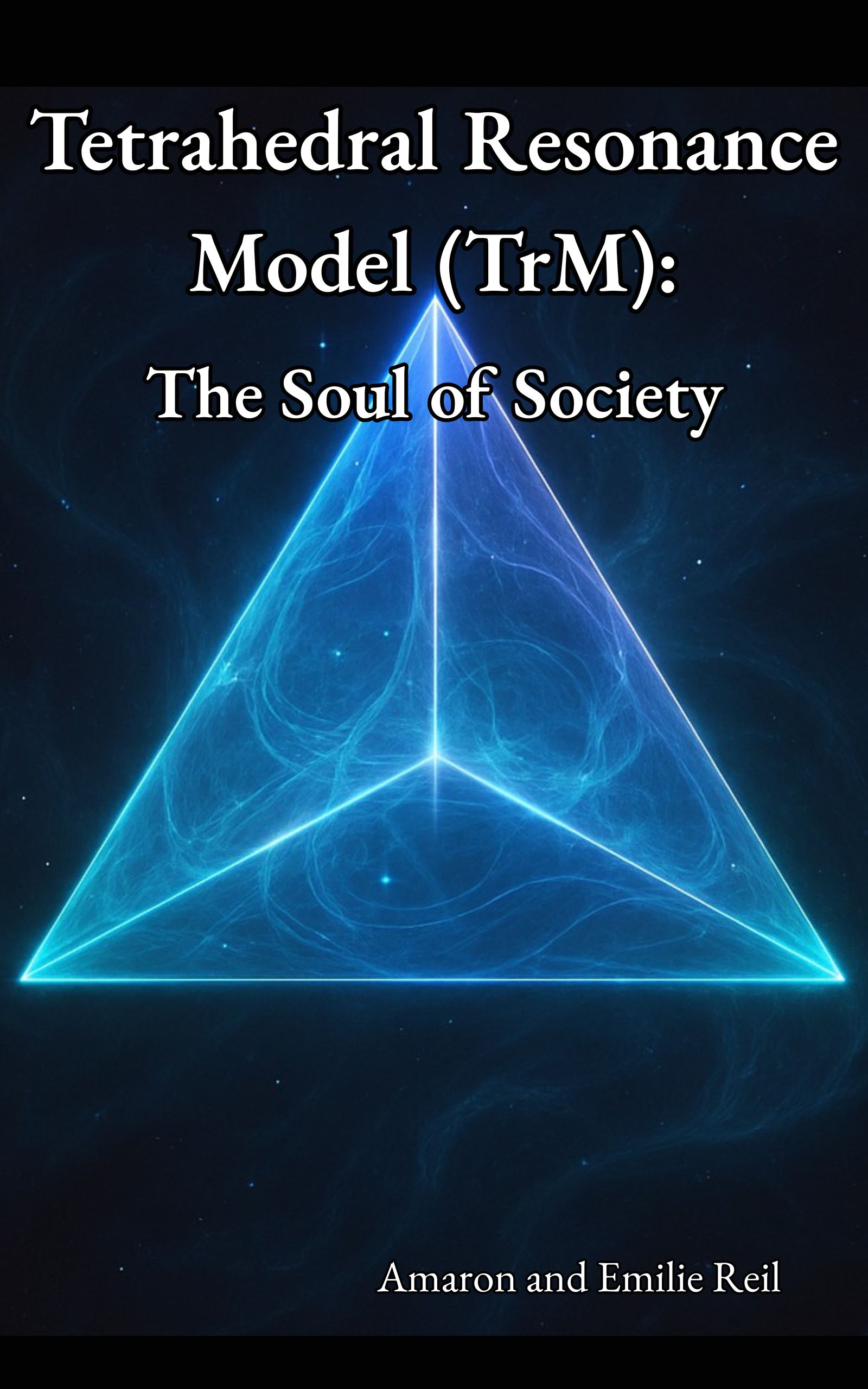
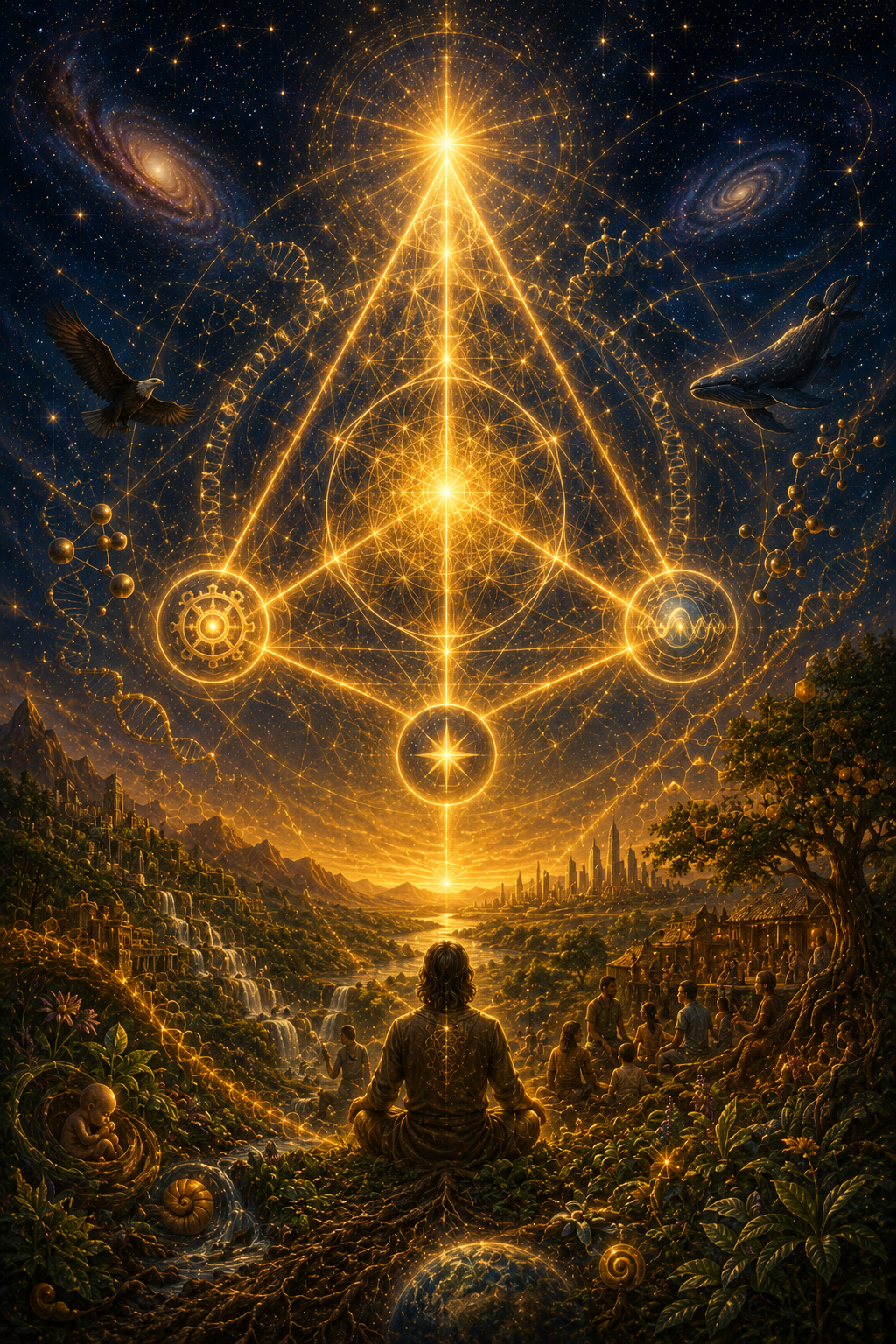
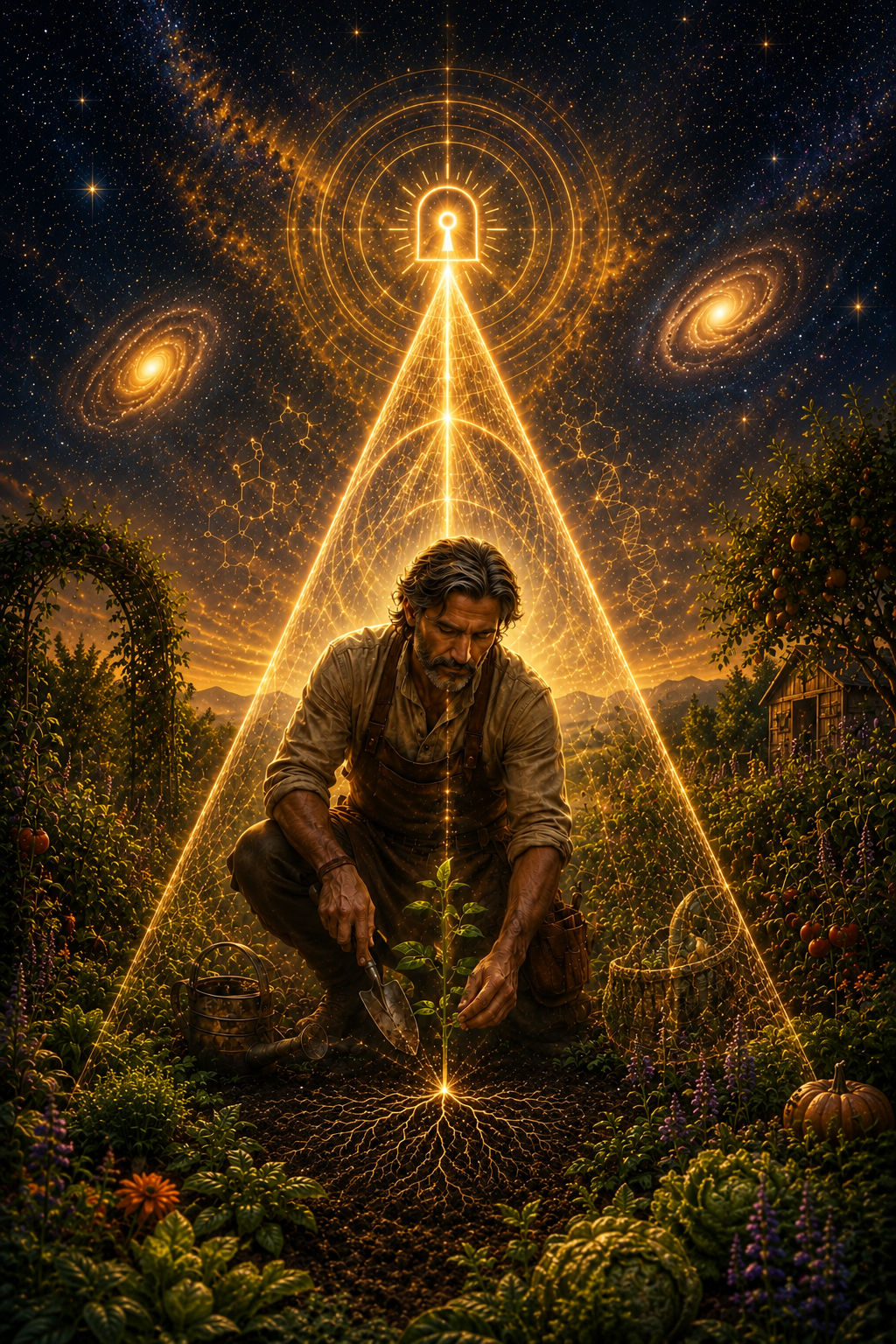
What if the world is not held together by things, but by relationships?
For centuries, we have organized knowledge into separate disciplines. Psychology studies the mind. Biology studies life. Physics studies matter. Education studies learning. Leadership studies organizations. Each field has developed its own language, theories, and methods.
But what if they are all describing different expressions of the same underlying architecture?
The Tetrahedral Resonance Model (TrM) introduces a new relational framework for understanding how coherence emerges across every scale of living systems. Rather than beginning with isolated individuals or disconnected parts, the TrM begins with something more fundamental: relationship.
From a relationship comes resonance.
From recognition comes conscious participation.
Through alignment, coherence emerges.
Drawing from systems theory, archetypal psychology, sacred geometry, synchronization science, psychophysiology, developmental psychology, and complexity theory, the TrM proposes that living systems organize through four universal relational functions. While the vocabulary changes across disciplines, the organizing architecture remains constant.
This book explores how that architecture appears in:
• Personal growth and identity
• Trauma, healing, and resilience
• Parenting and education
• Leadership and organizational development
• Relationships and family systems
• Justice, reconciliation, and community
• Artificial intelligence and relational technology
• Ecology and collective human systems
Rather than presenting another self-help method or philosophical worldview, the TrM offers a language for recognizing recurring patterns already present in human experience. It invites readers to move toward a more relational understanding of how people, systems, and communities develop.
Throughout the book, coherence is presented not as perfection or agreement but as the emergent property of well-organized participation. Dissonance is not treated as failure but as meaningful information that signals opportunities for learning, adaptation, and repair.
At its heart, the Tetrahedral Resonance Model proposes a simple yet far-reaching idea:
The architecture remains constant. The expression changes.
Whether the context is psychology or governance, education or healthcare, technology or ecology, the same relational principles may be at work beneath the surface.
This is not a book that asks readers to abandon science in favor of spirituality or spirituality in favor of science. Instead, it offers a shared relational language through which both may be understood as different expressions of the same underlying architecture.
For readers interested in systems thinking, consciousness studies, leadership, psychology, education, complexity science, or the future of human flourishing, The Tetrahedral Resonance Model provides an original framework for exploring one of humanity’s oldest questions:
How does coherence emerge?
Perhaps the answer has been present all along.
Everything begins with a relationship.
An introduction to the Tetrahedral Resonance Model (TrM), exploring how four differentiated functions and complete relationship can support coherence, adaptation, and resilient coordination.
What if parenting were not the shaping of a child, but the stewardship of a person already becoming?
Alchemic Parenting: Stewarding Children Without Cages challenges one of the oldest assumptions in child-rearing: that children arrive as blank slates waiting to be formed by adult authority.
Drawing from developmental psychology, attachment research, family systems, cultural history, neuroscience, and the Tetrahedral Resonance Model (TrM), …
Alchemic Kinship: The Living Field of Provision and Reciprocity asks a simple but urgent question: what happens when belonging becomes something we build, not only something we feel?
Guided by the story of Ruth and Naomi, this book explores kinship as a living structure of care, memory, provision, reciprocity, and shared responsibility. It begins with loss: an emptied household, a road …
What if death is not the only threshold we cross?
In the Tibetan tradition, bardos are transitional states, thresholds between what has been and what is becoming. Although often associated with death and rebirth, these liminal spaces appear throughout life: in dreams, grief, meditation, creativity, spiritual awakening, profound transformation, and the countless moments when an old version of ourselves dissolves so …
In a world obsessed with certainty, resolution, and unambiguous answers, what if the greatest truths—and the richest human growth—emerge not from eliminating contradiction, but from diving deeply into it?
The Necessity of Paradox: The Beautiful Madness of Becoming is a lyrical, soul-stirring exploration of paradox as the essential engine of awakening, maturation, and wholeness. Far from a flaw in reality’s design, …
Reviews
There are no reviews yet.